
For the first generation raised entirely online, Gen Z is becoming surprisingly interested in one thing: spending less time on their phones.
After years of nonstop notifications, doomscrolling, and algorithm-driven apps competing for attention, a growing number of young people are looking for ways to disconnect; not completely, but intentionally.
And one of the biggest trendsetters leading that movement is CatGPT.
CatGPT and the Rise of “Physical Phones”
Catherine Goetze, better known online as “CatGPT”, helped kick off one of the internet’s most talked-about digital detox trends with her company, Physical Phones.
The concept is brilliantly simple: retro landline-style handsets that connect to your smartphone via Bluetooth, allowing users to make calls without staring at a screen. The devices look like something from the early 2000s, but they’re designed for a very modern problem: smartphone addiction.
What started as a niche experiment quickly exploded online. After going viral on TikTok, Physical Phones reportedly generated over $120,000 in sales within just three days and later crossed thousands of units sold.
But the appeal goes beyond nostalgia.
Physical Phones represent a broader cultural shift happening among Gen Z: a desire to stay connected without being constantly consumed by screens. Instead of abandoning technology entirely, many young users are searching for tools that create healthier boundaries with it.
Ironically, Gen Z may become the first generation to intentionally rebel against the very technology they grew up with.
Meadow.so: The “Anti-Smartphone” Smartphone
If Physical Phones helped spark the conversation, Meadow is helping define what the next phase of digital minimalism could look like.
Meadow is a tiny, distraction-free phone designed specifically for being present. It includes essentials like calls, maps, Uber, music, notes, and a camera, but intentionally excludes social media, browsers, work email, and addictive notifications.
The company’s messaging is refreshingly direct:
“Your phone pulls you out of the moment. Meadow keeps you in it.”
Unlike traditional “dumb phones,” Meadow isn’t about disconnecting completely. It’s about removing the infinite-scroll behavior that dominates modern smartphones while still keeping useful real-world tools.
The device has become especially popular for nights out, vacations, concerts, and weekends; moments where people want to stay reachable without falling into social media rabbit holes.
The Rise of Phone-Free Events
The movement isn’t stopping at devices.
Phone-free experiences are becoming one of the fastest-growing trends in nightlife, music culture, and social events.
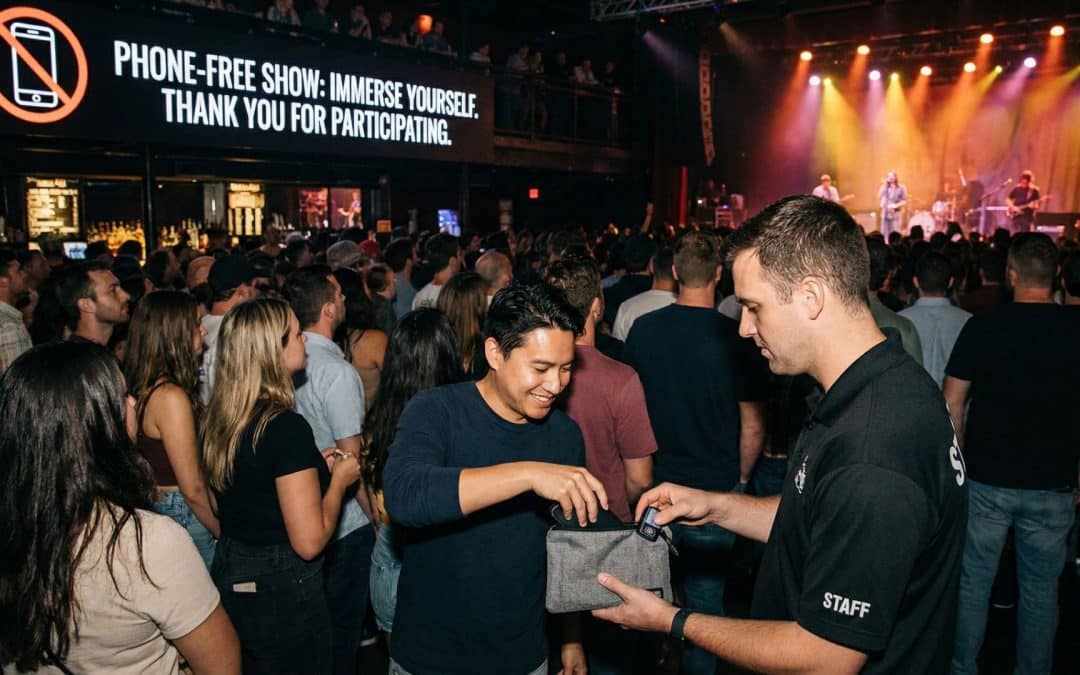
Across the country, raves, clubs, parties, retreats, and even weddings are beginning to enforce no-phone policies to encourage people to be more present.
Instead of recording every moment for Instagram Stories, attendees are being encouraged to actually experience the event in real time.
Many of these events now use lockable phone pouches from companies like Before The Internet, a vendor specializing in phone-free experiences across North America. Their system allows guests to keep possession of their phones while locking them away during events.
The trend mirrors the growing popularity of Yondr pouches, which have already been adopted at concerts, comedy shows, schools, and festivals to create distraction-free environments.
And surprisingly, younger audiences are embracing it.
What once sounded restrictive now feels refreshing.
In an era where everything is documented, constantly filmed, and optimized for social media, Gen Z is increasingly viewing privacy, presence, and real-world connection as luxuries.
The new status symbol might not be having the latest iPhone.
It might be needing your phone less.